
If your customers include both Indonesians and international visitors, you may wonder whether your website should speak both languages. Sometimes it’s essential, sometimes it’s an extra page nobody reads. Here’s how to decide.
01Start with who buys from you
Look at your last 50 customers or bookings. If almost all are international, English alone is usually enough. If a real share are Indonesian, or you want to grow locally, Bahasa Indonesia is worth it. People trust and buy more easily in their own language.
02Two languages, two sets of searches
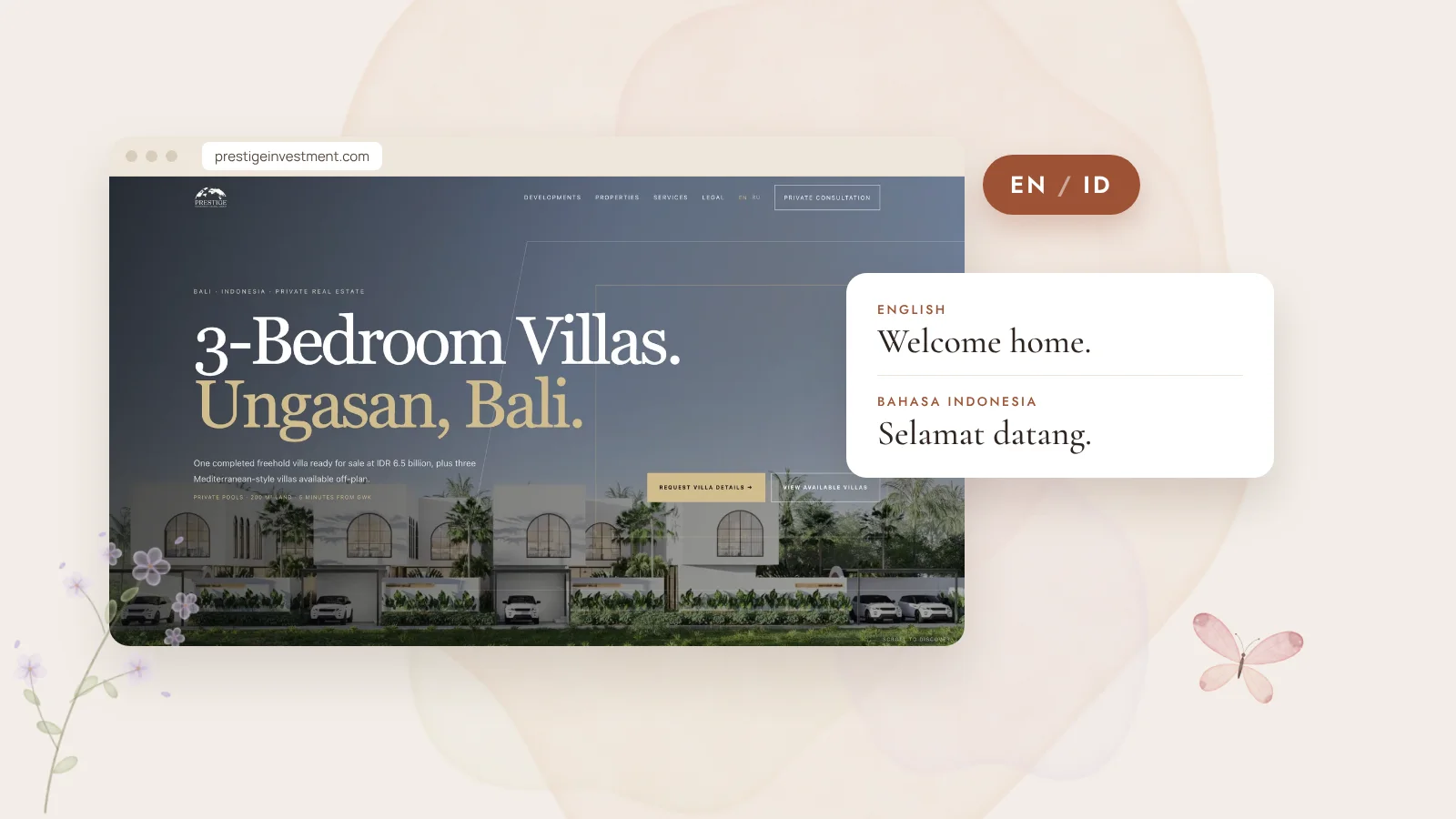
A bilingual website can rank for searches in both languages. Someone searching “villa keluarga di Ubud” will rarely find an English-only page. With a proper Indonesian version, each language has its own pages, titles and descriptions, and Google shows the right one to the right person.
03Do it properly, or not at all
- Avoid automatic translation widgets. They read awkwardly and Google often ignores them.
- Write naturally for each audience. Local customers may care about different things than tourists, like prices in rupiah or payment by transfer.
- Add a clear language switch at the top of every page.
- Keep both versions updated. An outdated second language looks worse than none.
04A smaller first step
If a full second language feels like too much, start with one Indonesian landing page for your main service or offer. It’s quicker to build, easy to keep updated, and shows you whether local demand is there before you translate everything.
- Do 20% or more of your customers speak it?
- Do people search for your service in that language?
- Can you keep both versions up to date?
- Can you reply to enquiries in that language?
—English, Indonesian, or both
I write and build websites in English and Indonesian, and I can help you decide whether a second language makes sense. A language switch with full setup is available as an add-on to any website.