
Most villas in Bali rely on booking platforms, and that makes sense. They bring visibility you couldn’t buy on your own. But relying on them completely means paying commission on every guest, following their rules and having no direct relationship with the people who stay with you. Your own website changes that.
01Keep more of every booking
Platform commissions are often 15% or more of each booking. On a villa earning Rp300 million a year, that’s Rp45 million or more. Even if only a quarter of your bookings move to your own website, it can pay for itself in the first season.
02Guests look you up anyway
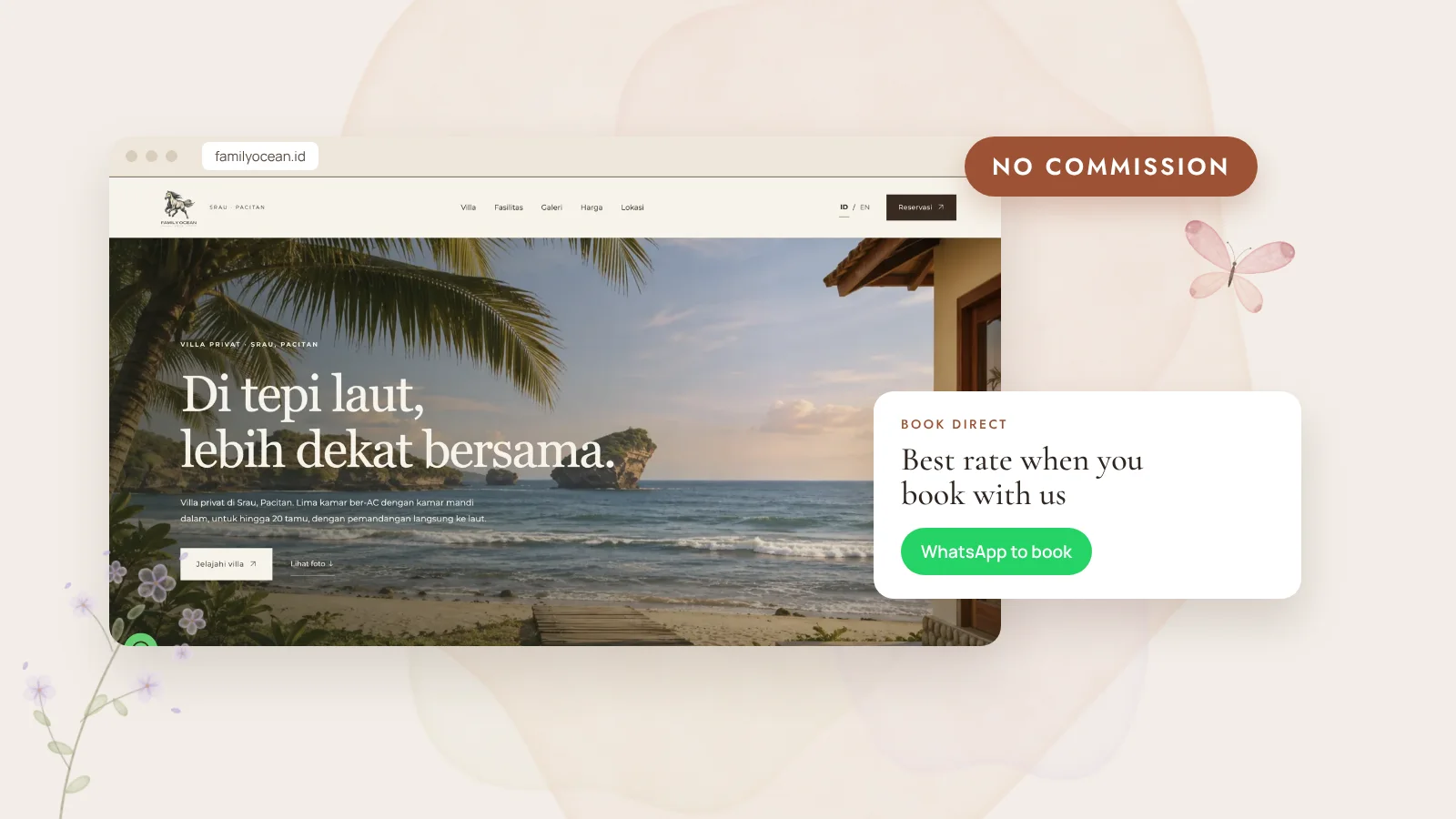
Many travellers find a villa on Airbnb, then search its name on Google to see more photos, check it’s real or look for a better rate. If you have no website, they land on another listing, or a competitor. If you do, they find your story, your best photos and a WhatsApp button.
03What a villa website needs
- Big, honest photos and a short video of every room, the pool and the view.
- Clear details: number of guests, bedrooms, what’s included, house rules.
- Location context: distance to the airport, beach and restaurants.
- An easy way to book: an availability calendar, a booking form or WhatsApp.
- A reason to book direct: best rate, free airport pickup or a welcome dinner.
04Use both, wisely
You don’t need to leave the platforms. Use them for discovery, then give every guest a reason to come back to you directly: a card in the villa with your website, a thank-you message with a return-guest offer, and a site that makes booking again effortless.
- A website with your villa’s name as the domain
- A “book direct” perk shown clearly on the homepage
- WhatsApp and a booking form on every page
- A Google Business Profile linking to your website
- A card or QR code in the villa for return guests
—Built for bookings
I’ve built villa sites with room videos, live calendars and internal booking systems, like Villa Family Ocean. If you’d like to take more bookings directly, I’m happy to look at what you have now.