

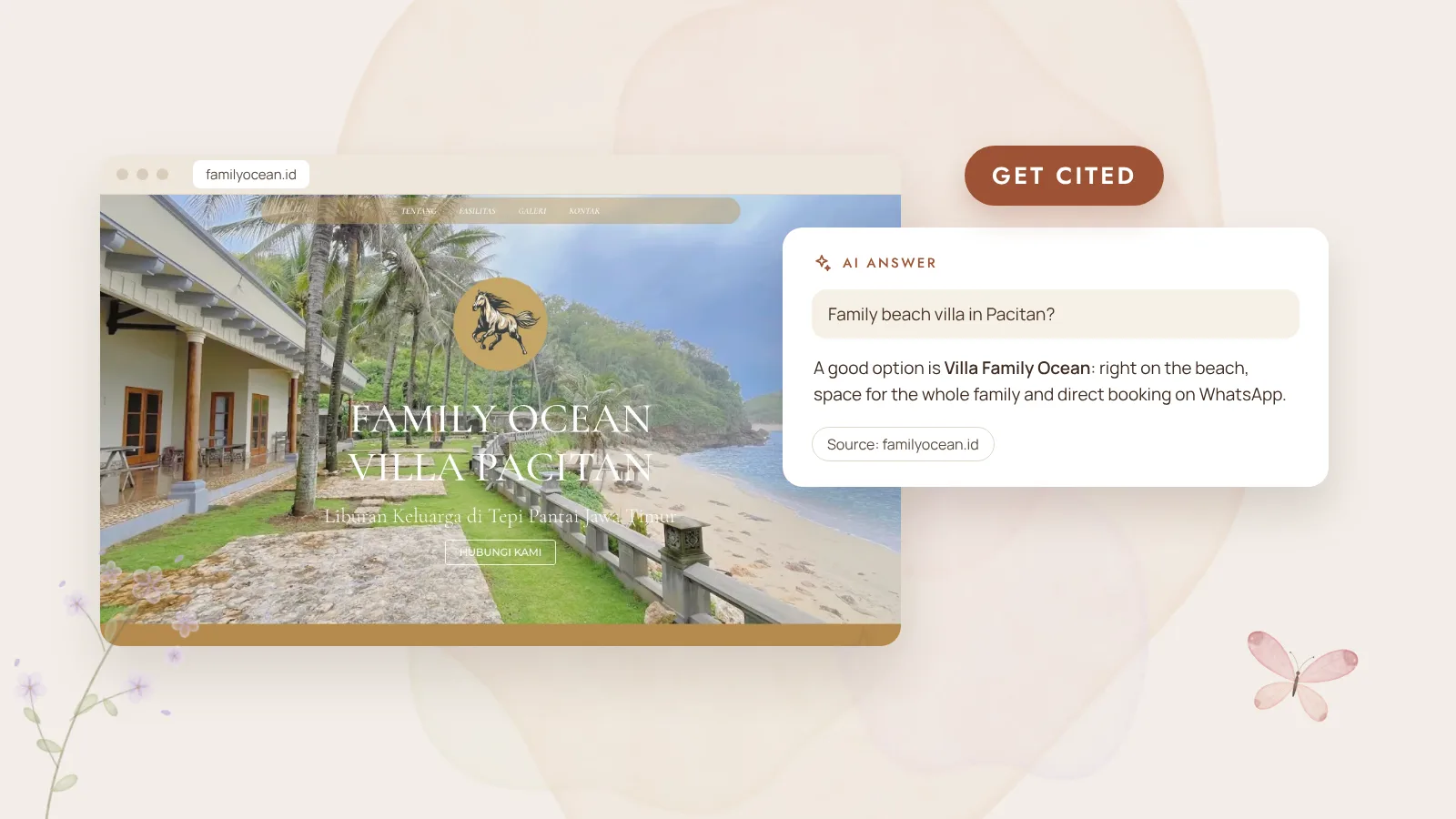
Ask ChatGPT for “a family villa near the beach in Pacitan” or “a web designer in Bali who speaks Dutch”, and you don’t get ten blue links. You get an answer, often with two or three businesses named and a few sources underneath. GEO is about being one of them. Here’s what it means for a small business, in plain language.
What GEO means
GEO stands for generative engine optimisation. “Generative engines” are the AI tools that write an answer instead of showing a list: ChatGPT, Gemini, Perplexity, Microsoft Copilot, and the AI Overviews and AI Mode at the top of Google. SEO helps you rank in the list of links. GEO helps you get mentioned and linked inside the answer.
You may also see it called AEO (answer engine optimisation) or AI search optimisation. They describe the same idea.
Is SEO dead now?
No. GEO grows out of good SEO, it doesn’t replace it. AI tools still read websites to write their answers, and they lean heavily on pages that search engines can find and trust. A website Google can’t find is a website AI can’t quote. What changes is what “good” looks like: clear, factual answers matter more than ever, and so does what other websites say about you.
What AI tools look for
- Clear answers on your own pages. AI tools pull short, factual passages. A page that says “3-bedroom villa with a private pool, 5 minutes from Batu Bolong beach, from Rp3.500.000 a night” is easy to quote. “Welcome to our sanctuary” is not.
- The real questions your customers ask. Is breakfast included? Do you speak English? How long does delivery take? Put the answers on your website, in a FAQ or on the page they belong to.
- The same facts everywhere. Your name, location, prices, hours and services should match on your website, Google Business Profile, Instagram, Tripadvisor and directories. When the facts agree, AI tools are more confident naming you.
- What others say about you. Reviews, local news features, directory listings, partner websites and forums. AI answers often recommend the businesses that other people mention, not just the ones that describe themselves well.
- Fresh, honest information. Old prices and outdated pages get passed over. Keep the important pages up to date.
- A website machines can read. Fast pages, real text instead of text inside images, structured data that labels your business, prices and FAQs, and no settings that block search engines or AI search crawlers.
What it looks like in real life
One of my clients, Villa Family Ocean in Pacitan, has a website that answers the basics in plain sentences: where it is, how many bedrooms and guests, and the price per night. As of November 2026, a Google search for “family villa in Pacitan” shows the villa’s website first, above Traveloka and Tiket.com. Google’s AI summary names it first too, and copies those facts straight from the website into its comparison table.
How to check if AI already mentions you
Open ChatGPT, Gemini, Perplexity and Google, and ask the questions a customer would ask, like “best private villa in Ubud for a honeymoon” or “where to buy natural body oil in Bali”. Note who gets named and which websites are listed as sources. Do it again every month, because the answers change often.
You can also see visits from AI tools in Google Analytics: look for traffic from chatgpt.com, perplexity.ai or gemini.google.com under your traffic sources. It’s usually small at first, but those visitors tend to arrive knowing what they want.
Two quick wins most businesses miss
Add your website to Bing Webmaster Tools as well as Google Search Console. Bing powers Microsoft Copilot, and it’s free. Complete your Google Business Profile with a clear description, services and real photos. I wrote a step-by-step Google Business Profile guide for that.
What to be careful about
Nobody can guarantee that ChatGPT or Google will recommend your business, so be wary of anyone who promises it. Mass-produced AI articles stuffed with keywords won’t help either; they tend to get ignored by people and machines alike. The businesses that show up in AI answers are usually the ones with clear websites, consistent details and real customers talking about them.
- Ask ChatGPT, Gemini, Perplexity and Google your customers’ questions, and note who gets named
- Write clear answers on your website: what you offer, where, for whom and from what price
- Add a FAQ with the questions customers really ask you
- Make your name, address, prices and hours match everywhere online
- Collect reviews and get mentioned on local news and directory sites
- Add your website to Google Search Console and Bing Webmaster Tools
Want me to look?
I can check how your business shows up on Google and in AI answers, and tell you the first three things I’d fix. Send me your link for a free SEO & GEO check, or see my SEO & GEO services.